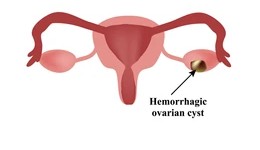
A hemorrhagic ovarian cyst (HOC) is a functional cyst that forms when a blood vessel within the ovarian follicle ruptures, causing blood to accumulate inside. These cysts are common but larger cysts can cause significant discomfort and complications.
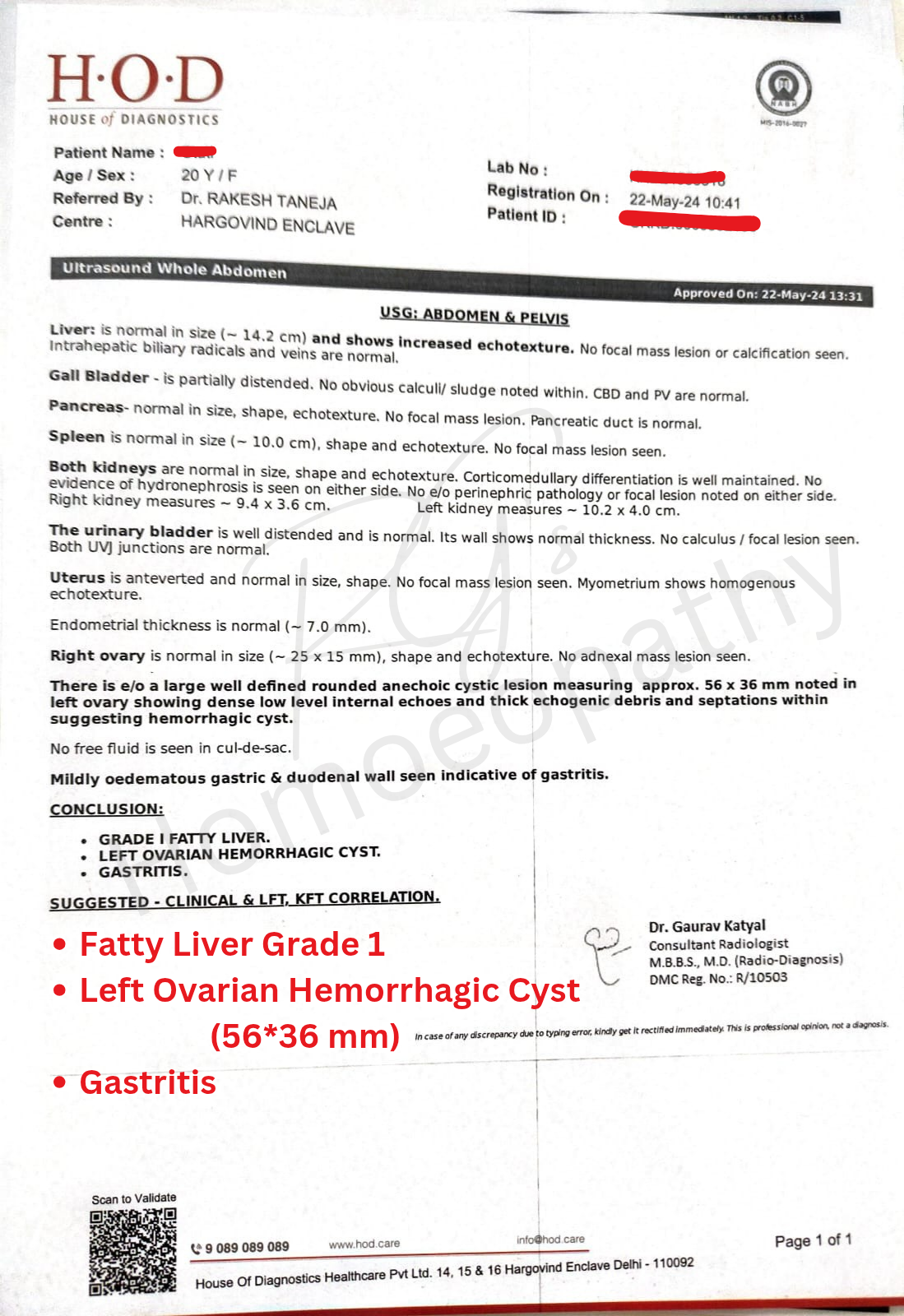

A 20 year old female visits the clinic with pelvic pain, dysmenorrhea and irregular menstrual cycle. Her ultrasound reports showed the following findings
- Left Ovarian Hemorrhagic Cyst (~56 × 36 mm) with dense internal echoes and thick echogenic debris.
- Grade I Fatty Liver (~14.2 cm)
- Gastritis
After 6 months of Homoeopathic Treatment
- Left ovarian hemorrhagic cyst resolved.
- No signs of fatty liver.
- Gastritis improved.
- Overall abdominal health restored with no abnormal findings.
Causes
- Hormonal Imbalance – Irregular ovulation or excessive estrogen production.
- Menstrual Cycle Variations – Often seen in women of reproductive age.
- Polycystic Ovary Syndrome (PCOS) – Increases the risk of cyst formation.
- Endometriosis – Endometrial tissue may form cystic lesions filled with blood.
- Use of Fertility Drugs – Can lead to excessive ovarian stimulation.
Symptoms:
- Pelvic Pain – Often on one side, worsening during menstruation.
- Lower Abdominal Heaviness – A sensation of pressure.
- Irregular Menstrual Cycles – Due to hormonal fluctuations.
- Painful Intercourse (Dyspareunia) – Especially deep penetration.
- Frequent Urination or Bowel Issues – Due to pressure on surrounding organs.
- Rupture Symptoms – Sudden severe pain, dizziness, nausea, or internal bleeding (in rare cases).
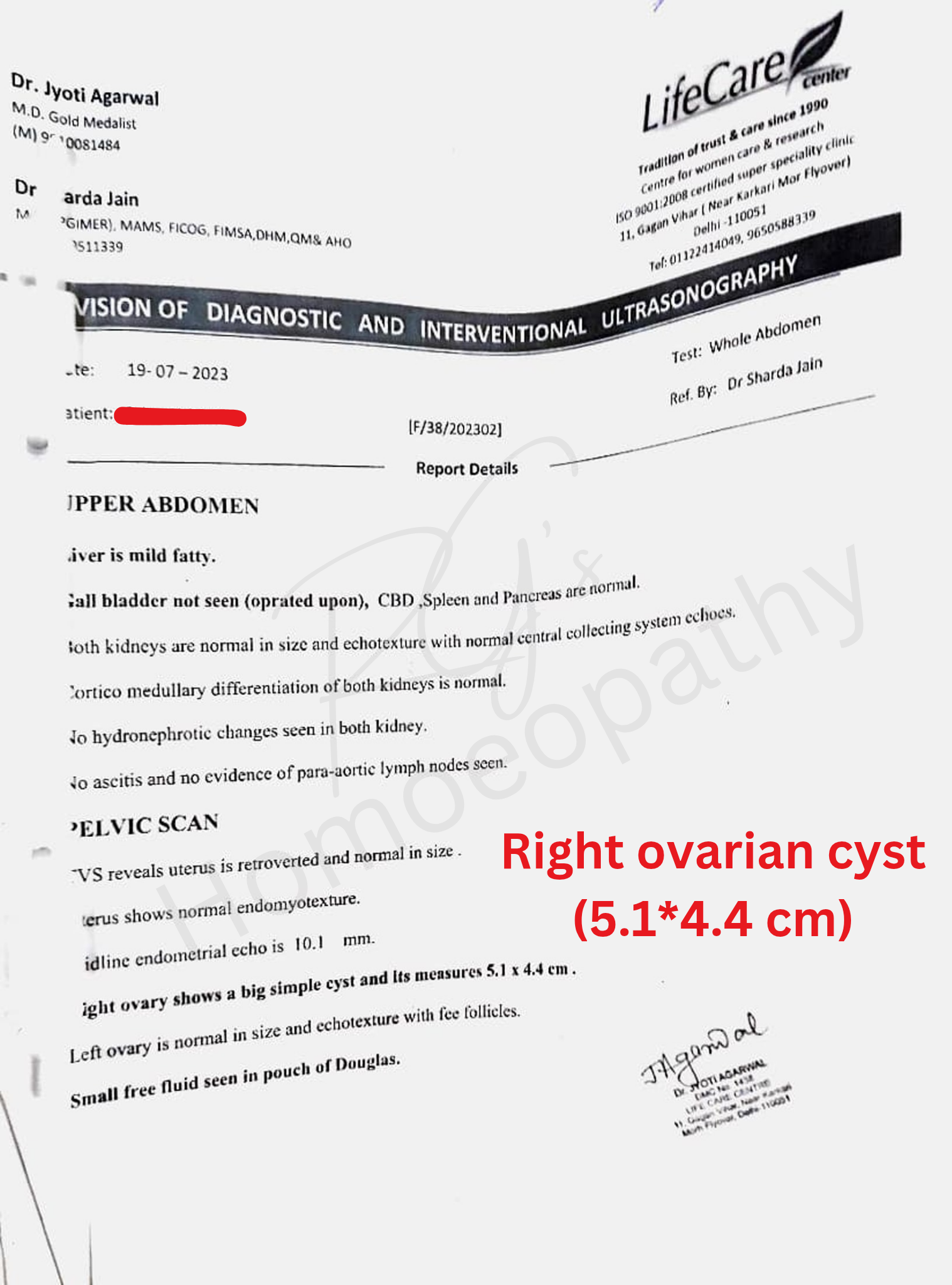

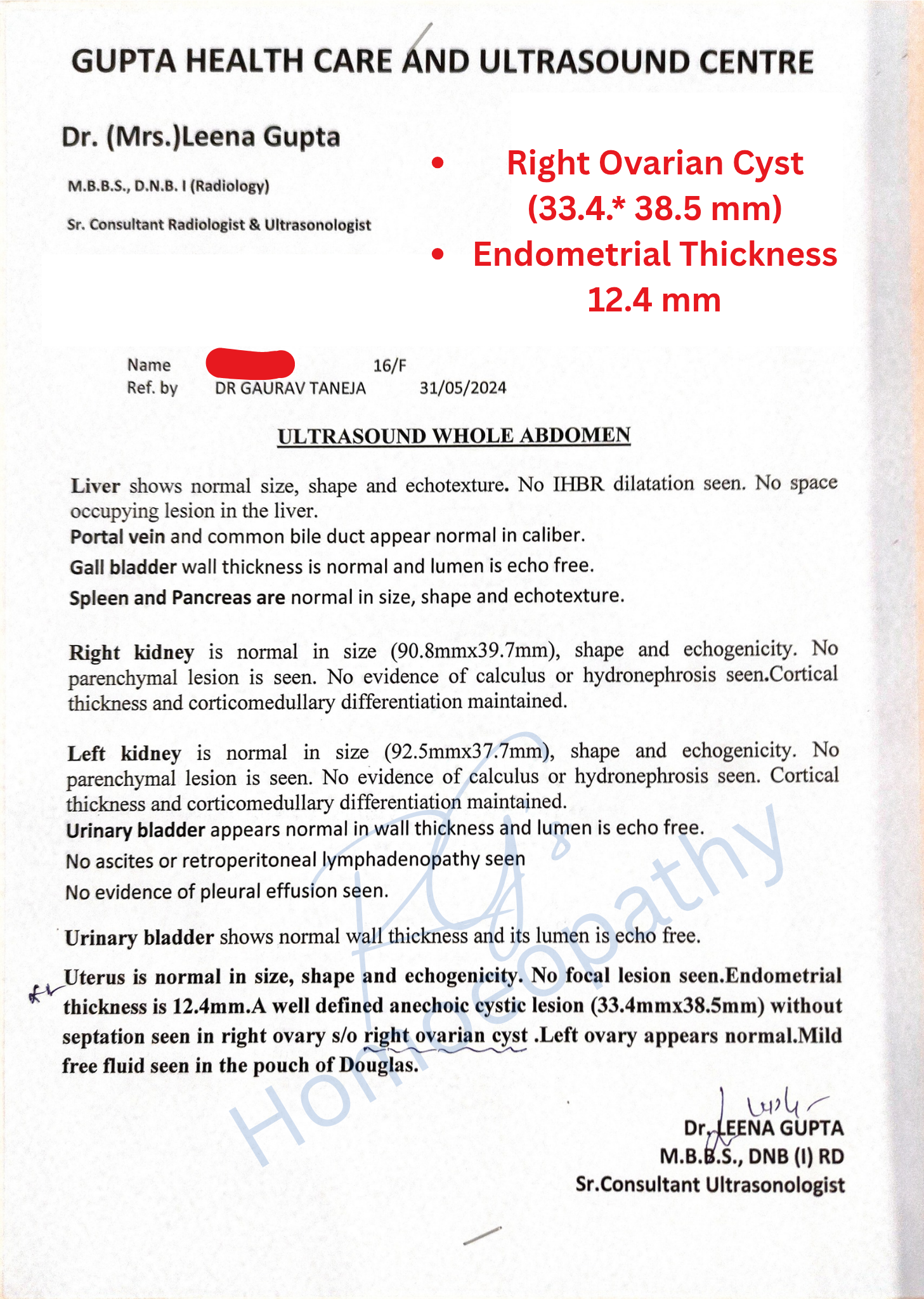

Prognosis and Possible Complications
- Rupture or Bleeding: Large cysts may burst, leading to internal bleeding and requiring emergency care.
- Torsion: A large cyst may twist the ovary, cutting off blood supply and causing severe pain.
- Chronic Pain or Adhesions: In some cases, repeated cyst formation can lead to pelvic adhesions.
Impact on Daily Life
- Pain and Discomfort – Can affect routine activities, including work and exercise.
- Emotional Stress – Anxiety related to menstrual irregularities and fertility concerns.
- Sexual Dysfunction – Pain during intercourse may affect relationships.
- Reduced Energy Levels – Chronic pelvic pain can lead to fatigue.
Conventional Treatment Approaches
- Observation: Small cysts are monitored through ultrasound.
- Pain Management: NSAIDs like ibuprofen to relieve pain.
- Hormonal Therapy: Birth control pills to prevent cyst formation.
Surgical Intervention:
- Cystectomy – Removal of the cyst while preserving the ovary.
- Oophorectomy – Removal of the ovary if necessary.
- Emergency Surgery – Required if rupture leads to internal bleeding.
Homeopathic Perspective:
An individualized treatment based on totality of symptoms focuses on:
- Reducing pain and inflammation naturally.
- Dissolving existing cysts and preventing recurrence.
- Balancing hormonal fluctuations to promote regular ovulation.
- Prescribing a constitutional remedy to prevent recurrence.
Schedule an appointment with us?
Interested in reading more about other cases cured at RG’s Homoeopathy?
Cases cured at RG’s Homoeopathy-
Sciatica
Sciatica is a type of nerve pain caused by irritation or compression of the sciatic nerve, which runs from the lower spine through the buttocks…
Continue reading
Uterine Fibroid
Uterine fibroids (leiomyomas or myomas) are benign (non-cancerous) smooth muscle tumors that develop in the uterus. They are common in women of reproductive age and…
Continue reading
Verruca Vulgaris
Verruca vulgaris, commonly known as a common wart, is a benign skin growth caused by the human papillomavirus (HPV), primarily types 2 and 4 (though…
Continue reading

 RG's Homoeopathy
Leave a comment