Sciatica is a type of nerve pain caused by irritation or compression of the sciatic nerve, which runs from the lower spine through the buttocks and down the back of each leg. It usually affects one side and can range from mild discomfort to severe, debilitating pain.

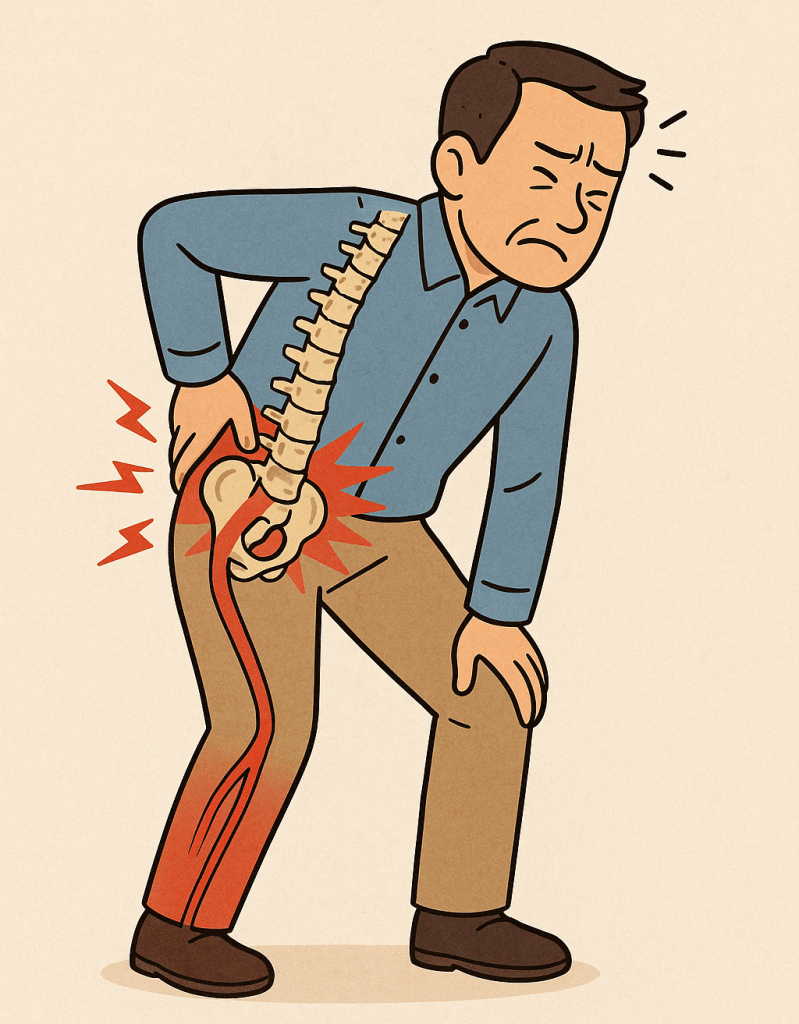
Mr. Kumar, aged 57 years reports the onset of sharp, shooting pain in his lower back, which started insidiously about three weeks ago. Within a few days, the pain began radiating down his left buttock, posterior thigh, and calf, reaching as far as the outer side of his foot. He describes the pain as burning and electric-like, worsened by prolonged sitting, bending forward, and especially while driving.
He also notes occasional tingling and numbness in the left foot, and a sensation of weakness when trying to climb stairs. He denies any bladder or bowel disturbances.
Clinical Examination:
- Posture slightly tilted to the right side
- Tenderness over the lumbosacral region (especially L4-L5)
- Positive Straight Leg Raise Test (SLRT) at 45° on the left
- Bragard’s sign positive (pain intensified with dorsiflexion of foot during SLRT)
- Diminished sensation over the lateral aspect of the left foot
Causes & Transmission
- Herniated or prolapsed disc pressing on nerve roots
- Lumbar spinal stenosis (narrowing of spinal canal)
- Piriformis syndrome (tight piriformis muscle compresses sciatic nerve)
- Spondylolisthesis
- Degenerative disc disease
- Trauma or injury to the lower back or pelvis
Symptoms
- Sharp, shooting, or burning pain from lower back to buttock and down the leg
- Numbness, tingling, or “pins and needles” sensation
- Muscle weakness in the affected leg or foot
- Pain worsens with prolonged sitting, bending, or coughing
Clinical Examination
- Straight Leg Raise Test (SLRT): The patient lies flat while the leg is lifted straight; if pain radiates down the leg between 30° and 70°, the test is considered positive, indicating nerve root irritation (commonly L4-S1).
- Bragard’s Sign: Performed after SLRT. After lifting the leg, the foot is dorsiflexed (toes pulled toward the shin). Increased pain indicates sciatic nerve involvement and helps differentiate from hamstring tightness.
Diagnosis
- Clinical history and physical examination
- MRI or CT scan to visualize disc herniation or nerve compression
- X-ray to assess spinal alignment or degeneration
- Nerve conduction studies in atypical or persistent cases
Impact on Daily Life
Sciatica can significantly impair daily activities such as walking, sitting, working, or even sleeping. Chronic pain may affect mood, productivity, and quality of life, leading to frustration, anxiety, or depression if left untreated. Early management and lifestyle adjustments are key to preventing long-term disability.
Dietary Measures to Alleviate Pain
- Limit inflammatory foods: Avoid refined sugars, trans fats, processed meats, and excessive caffeine
- Anti-inflammatory foods: Turmeric, ginger, garlic, green leafy vegetables, and berries
- Omega-3 fatty acids: Found in flaxseeds, walnuts, and fatty fish
- Magnesium-rich foods: Almonds, spinach, bananas, which support nerve health and muscle relaxation
- Stay hydrated: To maintain disc integrity and overall cellular function
Conventional Treatment:
- Rest with gentle movement; avoid prolonged sitting or standing
- NSAIDs for inflammation and pain relief
- Physical therapy, stretching, and strengthening exercises
- Hot/cold packs
Interventional:
- Corticosteroid injections near the affected nerve root
- Surgery in severe cases with nerve damage or loss of bladder/bowel control
Homeopathic Perspective:
Individualized treatment based on totality of symptoms.
Focus on constitutional remedy to prevent recurrence.
Schedule an appointment with us?
Interested in reading more about other cases cured at RG’s Homoeopathy?
Cases cured at RG’s Homoeopathy-
Sciatica
Sciatica is a type of nerve pain caused by irritation or compression of the sciatic nerve, which runs from the lower spine through the buttocks…
Continue reading
Uterine Fibroid
Uterine fibroids (leiomyomas or myomas) are benign (non-cancerous) smooth muscle tumors that develop in the uterus. They are common in women of reproductive age and…
Continue reading
Hemorrhagic Ovarian Cyst
A hemorrhagic ovarian cyst (HOC) is a functional cyst that forms when a blood vessel within the ovarian follicle ruptures, causing blood to accumulate inside.…
Continue reading
Something went wrong. Please refresh the page and/or try again.
 RG's Homoeopathy