Uterine fibroids (leiomyomas or myomas) are benign (non-cancerous) smooth muscle tumors that develop in the uterus. They are common in women of reproductive age and can vary in size, number, and location within the uterus.

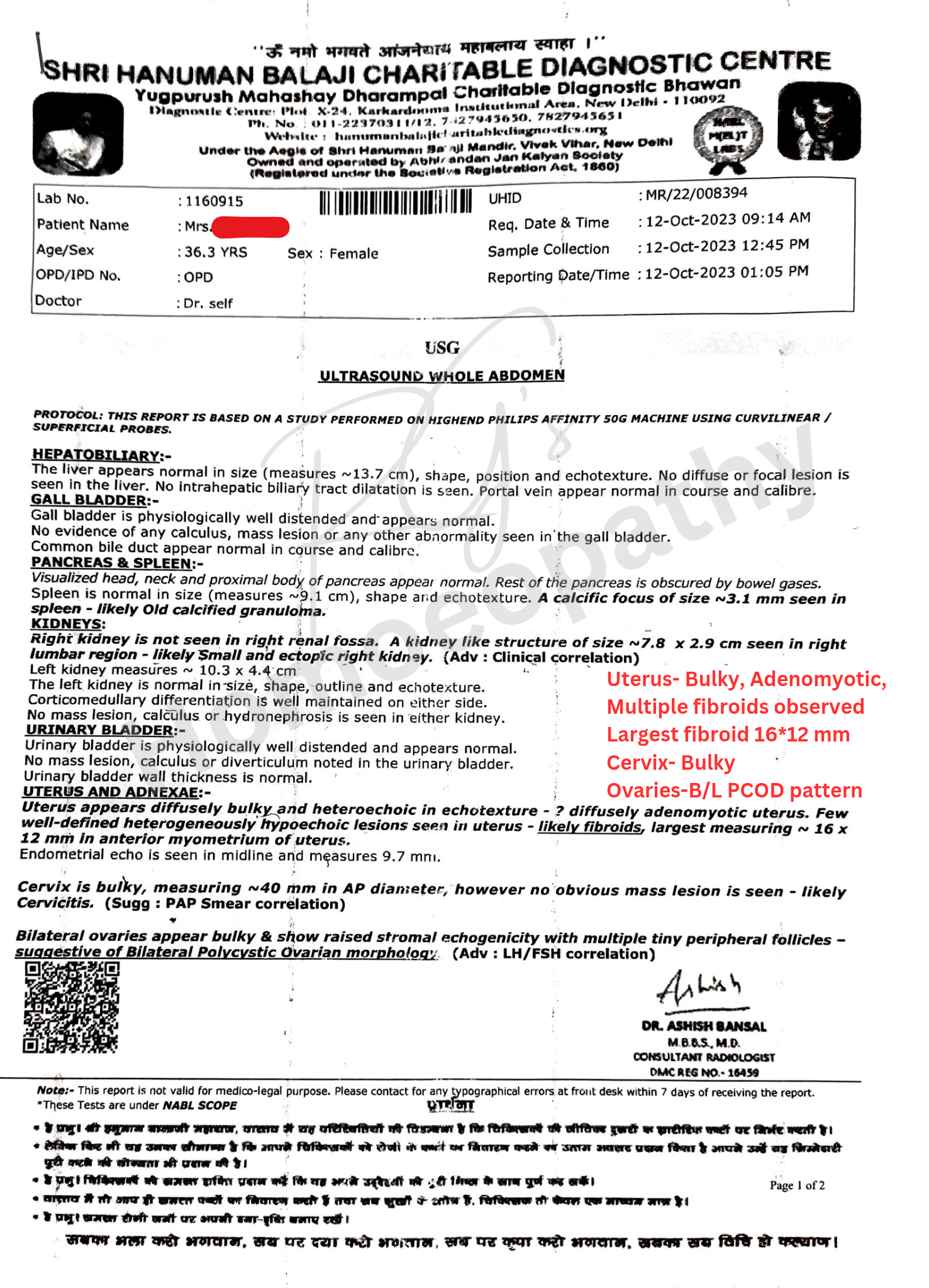
A 36-year-old female presented with severe pelvic pain, heavy menstrual bleeding with clots. She had a constant heaviness in pelvic region since last 2 months associated with thick, white leucorrhea daily. Her Ultrasound report was as follows:
- Uterus: Shows multiple fibroids (largest 16 × 12 mm)
- Uterus: bulky, adenomyosis
- Cervix: bulky suggestive of cervicitis
- Bilateral PCOD (polycystic ovarian morphology)
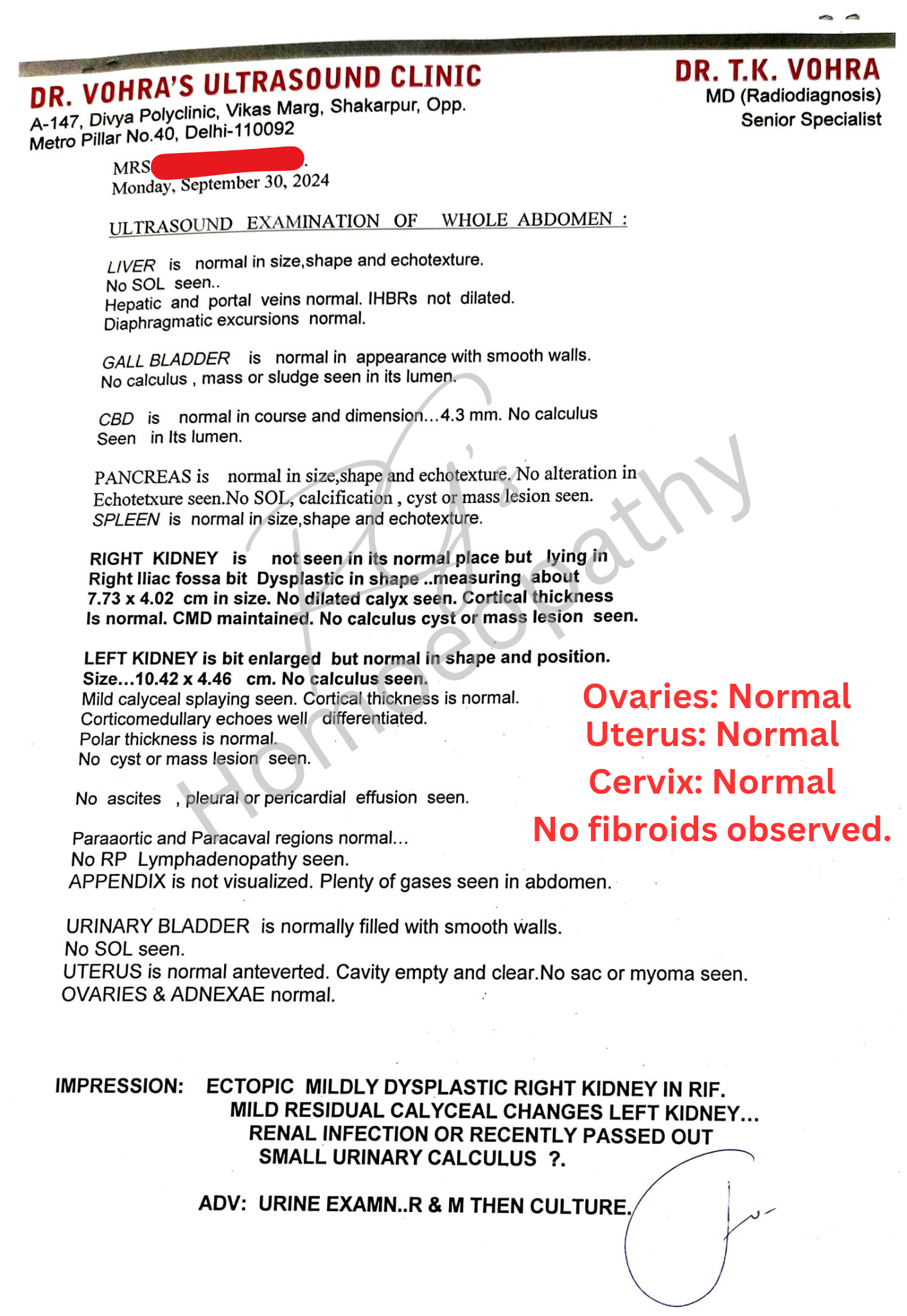
After 6 months of Homoeopathic Treatment
- Normal-sized uterus with no fibroids observed.
- Normal cervix.
- Normal ovaries and adnexae.
Causes and Risk Factors:
- Hormonal Imbalance: Estrogen and progesterone promote fibroid growth.
- Genetics: Family history increases the risk.
- Race: More common in African American women.
- Obesity: Higher estrogen levels can contribute.
- Diet & Lifestyle: High red meat intake and low vitamin D levels may be linked.
Types of Fibroids:
- Intramural: Within the uterine wall (most common).
- Subserosal: Grow on the outer surface of the uterus.
- Submucosal: Protrude into the uterine cavity (can cause heavy bleeding).
- Pedunculated: Attached to the uterus by a stalk.
Symptoms:
- Heavy or prolonged menstrual bleeding
- Pelvic pain or pressure
- Frequent urination or difficulty emptying the bladder
- Constipation
- Backache or leg pain
- Infertility or pregnancy complications in some cases
Diagnosis:
- Ultrasound (USG): First-line imaging.
- MRI: Provides more detailed imaging.
- Hysteroscopy/Sonohysterography: Useful for submucosal fibroids.
Treatment Options:
- Medical Management:
- Hormonal therapy (e.g., birth control pills, GnRH agonists)
- NSAIDs for pain relief
- Tranexamic acid for heavy bleeding
- Surgical Management:
- Myomectomy: Removal of fibroids while preserving the uterus (for fertility preservation).
- Hysterectomy: Complete removal of the uterus (definitive treatment for symptomatic cases).
Prognosis:
- Fibroids may shrink after menopause.
- Proper treatment can effectively manage symptoms.
- Recurrence is possible, especially after myomectomy.
Lifestyle & Dietary Recommendations:
- Diet: Increase iron-rich foods (beetroot, spinach, jaggery) to prevent anemia.
- Hydration: Drink plenty of water to prevent estrogen dominance.
- Exercise: Light yoga and walking help with circulation.
- Stress Management: Meditation and relaxation techniques reduce hormonal imbalances.
Homeopathic Perspective:
Individualized treatment based on totality of symptoms.
Focus on constitutional remedy to prevent recurrence.
Schedule an appointment with us?
Interested in reading more about other cases cured at RG’s Homoeopathy?
Cases cured at RG’s Homoeopathy-
Sciatica
Sciatica is a type of nerve pain caused by irritation or compression of the sciatic nerve, which runs from the lower spine through the buttocks…
Continue reading
Uterine Fibroid
Uterine fibroids (leiomyomas or myomas) are benign (non-cancerous) smooth muscle tumors that develop in the uterus. They are common in women of reproductive age and…
Continue reading
Hemorrhagic Ovarian Cyst
A hemorrhagic ovarian cyst (HOC) is a functional cyst that forms when a blood vessel within the ovarian follicle ruptures, causing blood to accumulate inside.…
Continue reading
Something went wrong. Please refresh the page and/or try again.



 RG's Homoeopathy