Verruca vulgaris, commonly known as a common wart, is a benign skin growth caused by the human papillomavirus (HPV), primarily types 2 and 4 (though other types can also be involved). It often appears on the hands, fingers, elbows, and knees as a rough, raised, and sometimes cauliflower-like lesion.
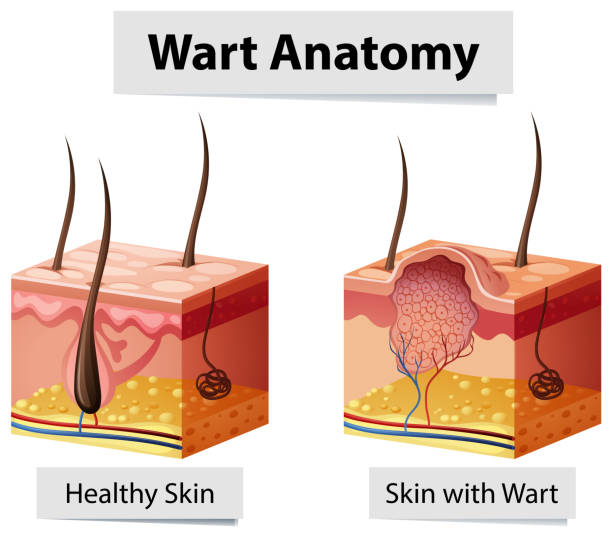

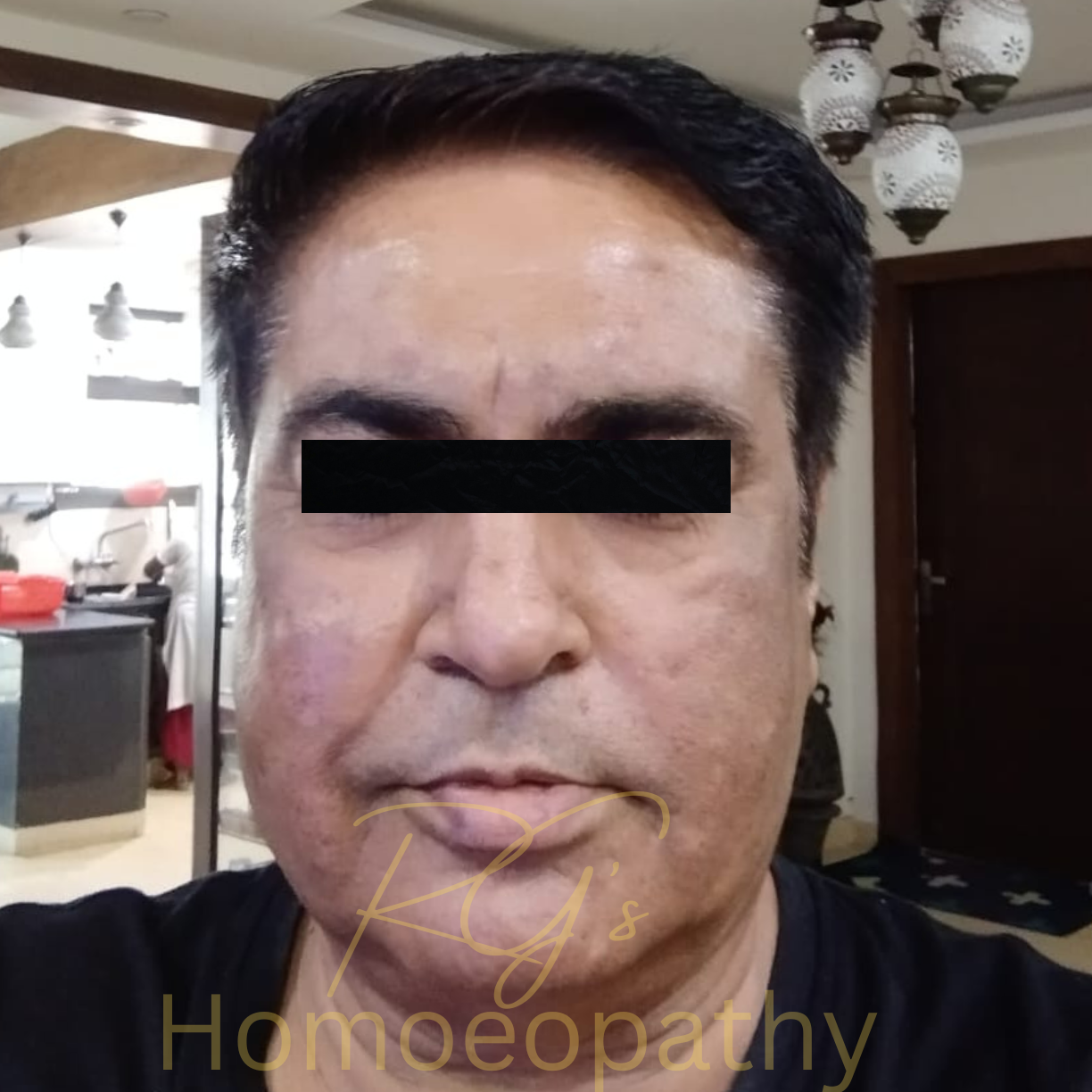
A middle-aged man with multiple hyperpigmented, verrucous, and raised skin lesions predominantly on the face, including the forehead, cheeks, and periorbital area visited the clinic for treatment. These lesions appear cauliflower-shaped and warty.
Diagnosis:
Verruca Vulgaris (Common Warts)–
Multiple cauliflower-like or hyperkeratotic lesions having a rough, firm, irregular surface.
Causes & Transmission
- Direct skin contact with HPV (e.g., from infected surfaces or another person).
- Small cuts or abrasions increase susceptibility.
- Common in children, immunocompromised individuals, and those frequently handling wet surfaces (e.g., swimmers).
Symptoms
- Firm, rough, raised lesion with a rough surface.
- May have black dots (thrombosed capillaries).
- Usually painless but can be tender if on pressure areas.
Clinical Examination
Appearance:
- Small, rough, firm papule with an irregular surface.
- May have a cauliflower-like or hyperkeratotic texture.
- Can be single or multiple.
- Possible black dots (thrombosed capillaries) on the surface.
Location & Distribution:
- Often found on the eyelids, lips, forehead, cheeks or around finger nails.
- Can be isolated or appear in clusters.
Palpation:
- Surface feels rough, unlike smooth skin lesions (e.g., molluscum contagiosum).
- Non-tender in most cases, unless irritated.
Diagnostic Confirmation (if needed)
Dermatoscopy: Shows a papillomatous surface with red or black dots (capillary loops).
Scraping Test: Gently scraping reveals pinpoint bleeding (confirming capillary involvement).
Biopsy: Histopathology shows hyperkeratosis, papillomatosis, and koilocytes (HPV-infected keratinocytes).
Differential Diagnosis
- Seborrheic keratosis – More waxy and stuck-on appearance.
- Molluscum contagiosum – Dome-shaped with central umbilication.
- Actinic keratosis – More scaly and linked to sun exposure.
- Basal cell carcinoma (rare in young patients) – Pearly edges, slow-growing.
Conventional Treatment:
- Cryotherapy (freezing)
- Curettage (scraping)
- Electrosurgery
- Laser ablation
- Often done for cosmetic reasons or irritation
Homeopathic Perspective:
Individualized treatment based on totality of symptoms.
Focus on constitutional remedy to prevent recurrence.
Schedule an appointment with us?
Interested in reading more about other cases cured at RG’s Homoeopathy?
Cases cured at RG’s Homoeopathy-
Sciatica
Sciatica is a type of nerve pain caused by irritation or compression of the sciatic nerve, which runs from the lower spine through the buttocks…
Continue reading
Uterine Fibroid
Uterine fibroids (leiomyomas or myomas) are benign (non-cancerous) smooth muscle tumors that develop in the uterus. They are common in women of reproductive age and…
Continue reading
Hemorrhagic Ovarian Cyst
A hemorrhagic ovarian cyst (HOC) is a functional cyst that forms when a blood vessel within the ovarian follicle ruptures, causing blood to accumulate inside.…
Continue reading
Something went wrong. Please refresh the page and/or try again.
 RG's Homoeopathy