Tag: wellness

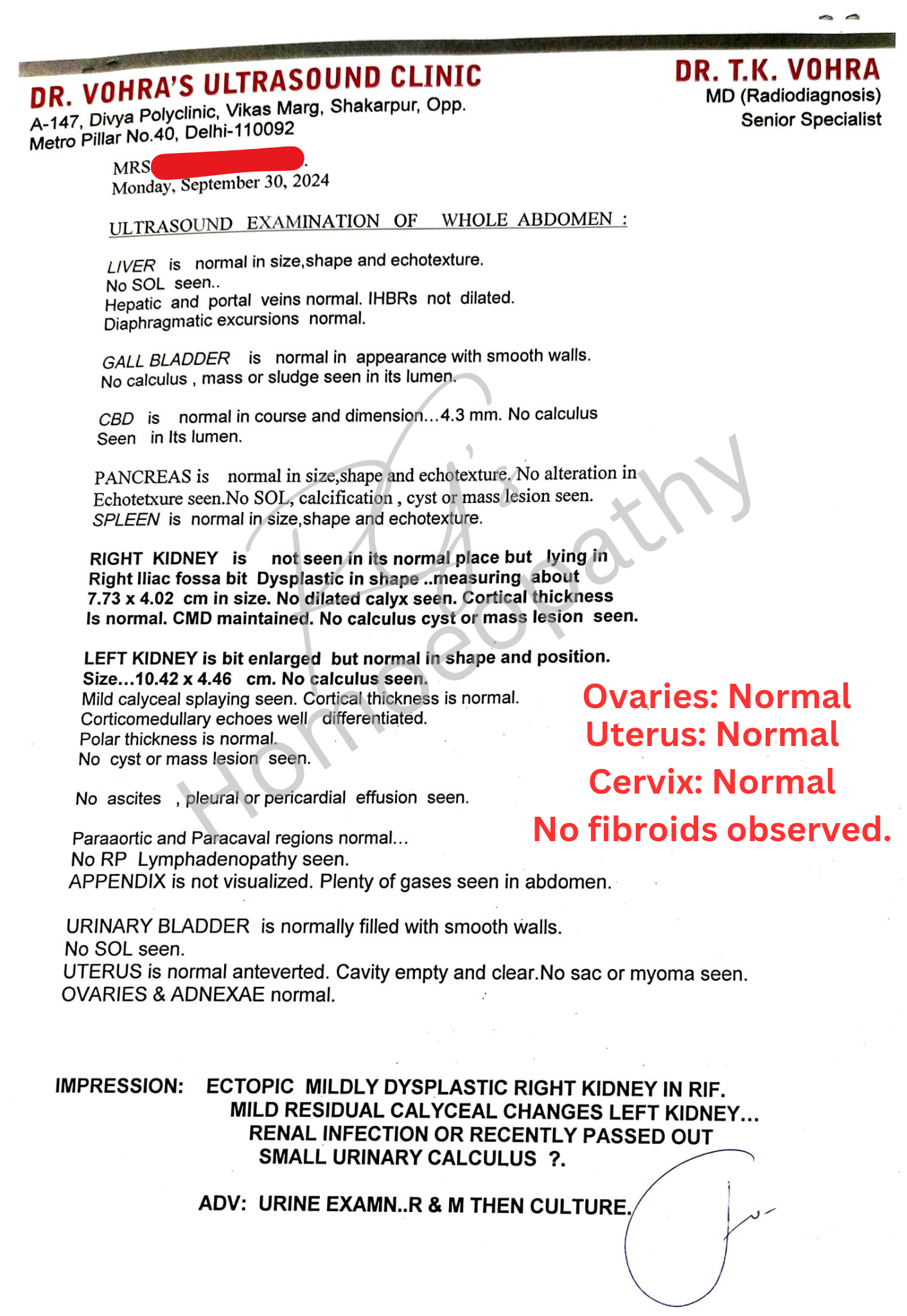
  • Uterine Fibroid

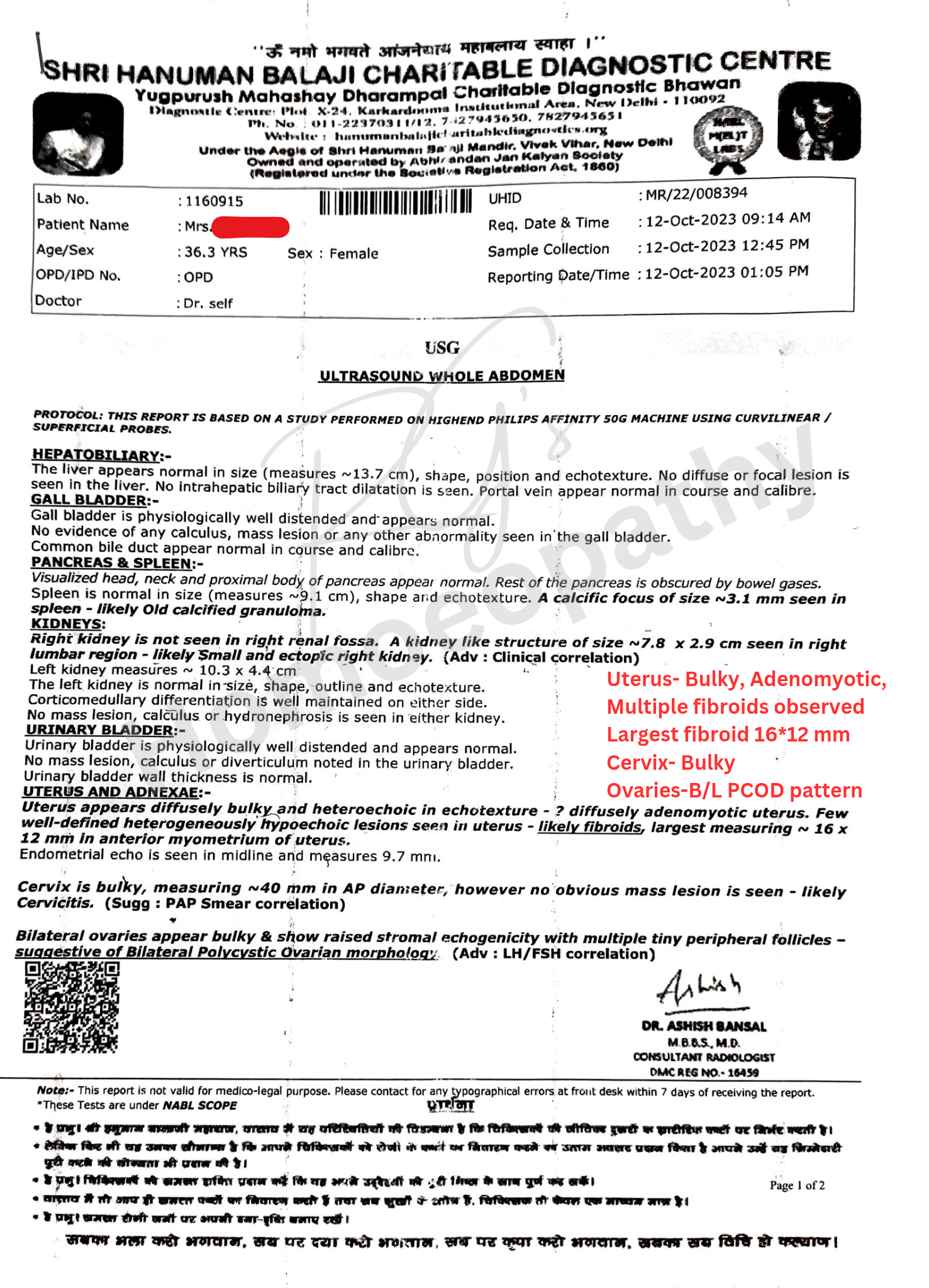
    Uterine fibroids (leiomyomas or myomas) are benign (non-cancerous) smooth muscle tumors that develop in the uterus. They are common in women of reproductive age and can vary in size, number, and location within the uterus.

    Causes and Risk Factors:

    • Hormonal Imbalance: Estrogen and progesterone promote fibroid growth.
    • Genetics: Family history increases the risk.
    • Race: More common in African American women.
    • Obesity: Higher estrogen levels can contribute.
    • Diet & Lifestyle: High red meat intake and low vitamin D levels may be linked.

    Types of Fibroids:

    1. Intramural: Within the uterine wall (most common).
    2. Subserosal: Grow on the outer surface of the uterus.
    3. Submucosal: Protrude into the uterine cavity (can cause heavy bleeding).
    4. Pedunculated: Attached to the uterus by a stalk.

    Symptoms:

    • Heavy or prolonged menstrual bleeding
    • Pelvic pain or pressure
    • Frequent urination or difficulty emptying the bladder
    • Constipation
    • Backache or leg pain
    • Infertility or pregnancy complications in some cases

    Diagnosis:

    • Ultrasound (USG): First-line imaging.
    • MRI: Provides more detailed imaging.
    • Hysteroscopy/Sonohysterography: Useful for submucosal fibroids.

    Treatment Options:

    • Medical Management:
      • Hormonal therapy (e.g., birth control pills, GnRH agonists)
      • NSAIDs for pain relief
      • Tranexamic acid for heavy bleeding
    • Surgical Management:
      • Myomectomy: Removal of fibroids while preserving the uterus (for fertility preservation).
      • Hysterectomy: Complete removal of the uterus (definitive treatment for symptomatic cases).

    Prognosis:

    • Fibroids may shrink after menopause.
    • Proper treatment can effectively manage symptoms.
    • Recurrence is possible, especially after myomectomy.

    Lifestyle & Dietary Recommendations:

    • Diet: Increase iron-rich foods (beetroot, spinach, jaggery) to prevent anemia.
    • Hydration: Drink plenty of water to prevent estrogen dominance.
    • Exercise: Light yoga and walking help with circulation.
    • Stress Management: Meditation and relaxation techniques reduce hormonal imbalances.

    Homeopathic Perspective:

    Individualized treatment based on totality of symptoms.

    Focus on constitutional remedy to prevent recurrence.


    Schedule an appointment with us?


    Interested in reading more about other cases cured at RG’s Homoeopathy?

    Cases cured at RG’s Homoeopathy-

    Something went wrong. Please refresh the page and/or try again.
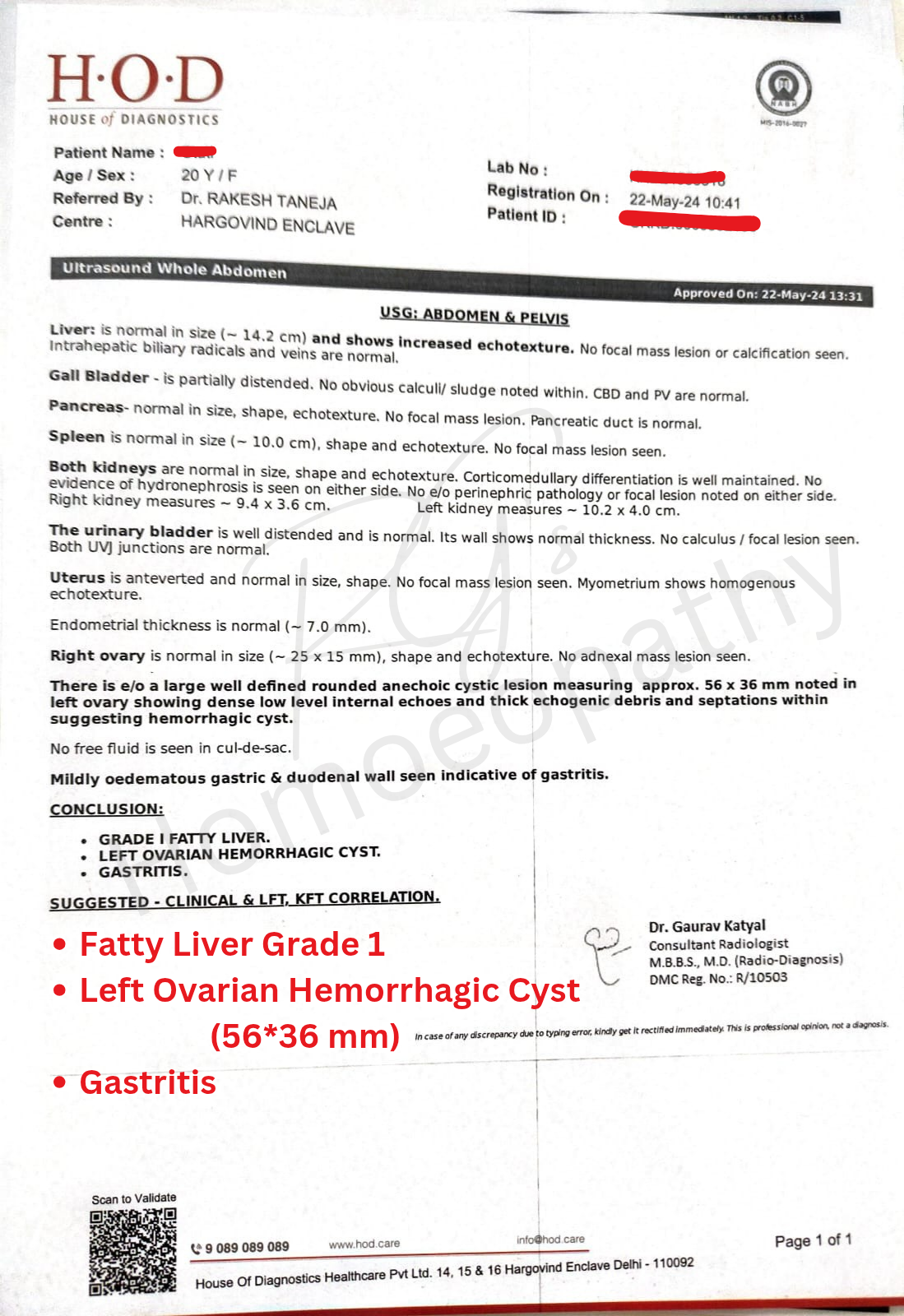
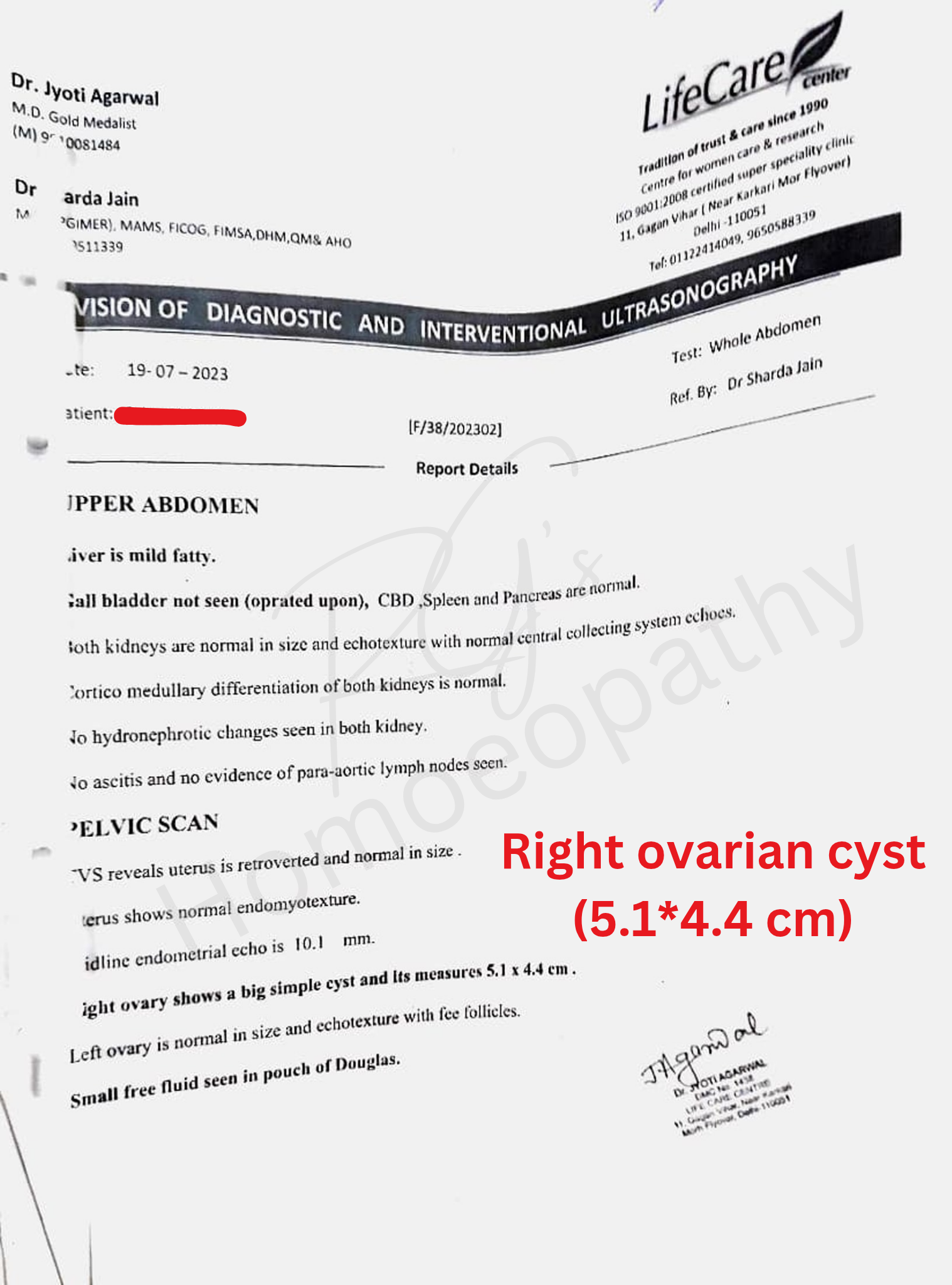
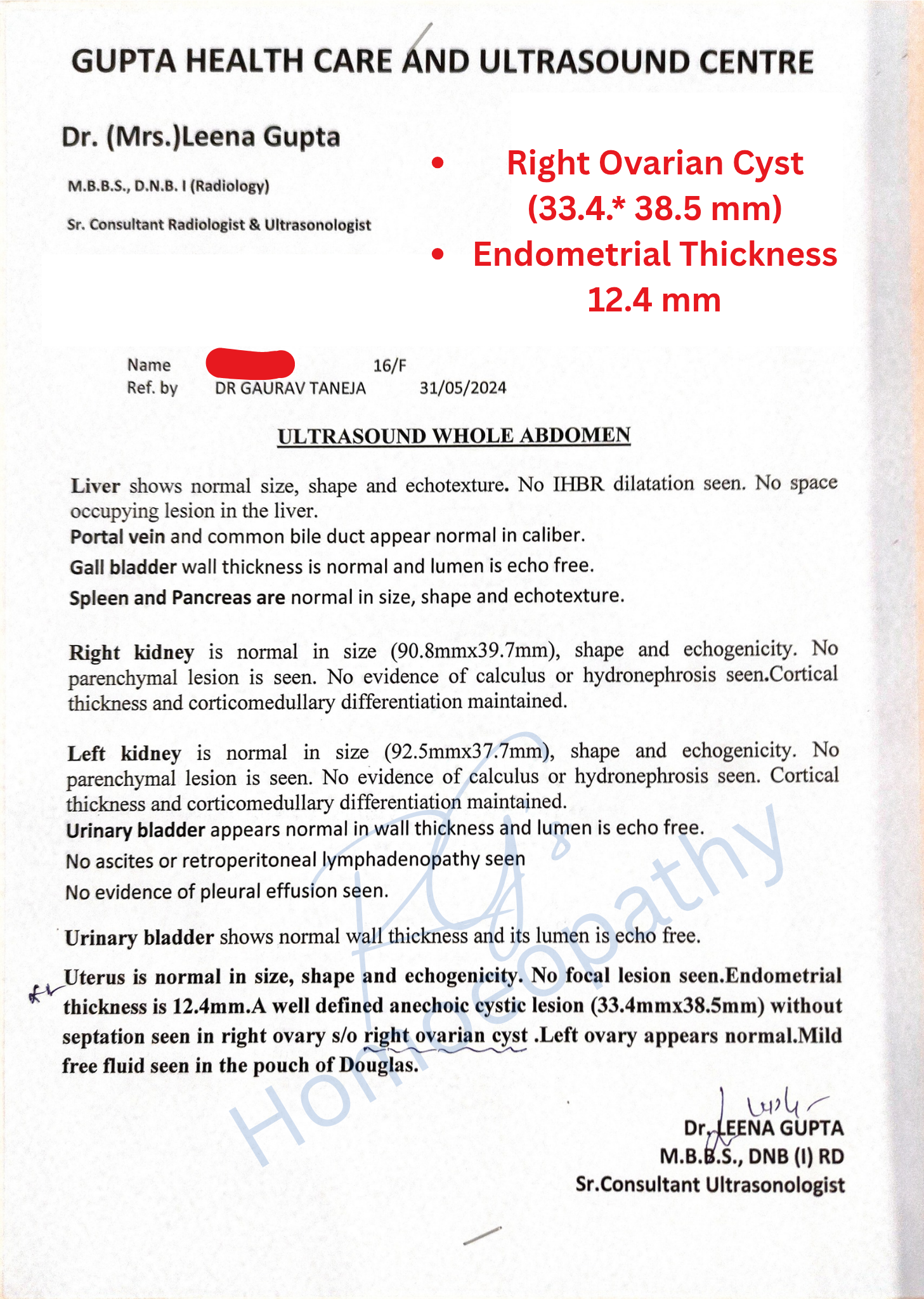
  • Hemorrhagic Ovarian Cyst

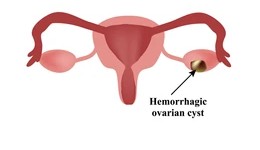
    A hemorrhagic ovarian cyst (HOC) is a functional cyst that forms when a blood vessel within the ovarian follicle ruptures, causing blood to accumulate inside. These cysts are common but larger cysts can cause significant discomfort and complications.

    Causes

    • Hormonal Imbalance – Irregular ovulation or excessive estrogen production.
    • Menstrual Cycle Variations – Often seen in women of reproductive age.
    • Polycystic Ovary Syndrome (PCOS) – Increases the risk of cyst formation.
    • Endometriosis – Endometrial tissue may form cystic lesions filled with blood.
    • Use of Fertility Drugs – Can lead to excessive ovarian stimulation.

    Symptoms:

    • Pelvic Pain – Often on one side, worsening during menstruation.
    • Lower Abdominal Heaviness – A sensation of pressure.
    • Irregular Menstrual Cycles – Due to hormonal fluctuations.
    • Painful Intercourse (Dyspareunia) – Especially deep penetration.
    • Frequent Urination or Bowel Issues – Due to pressure on surrounding organs.
    • Rupture Symptoms – Sudden severe pain, dizziness, nausea, or internal bleeding (in rare cases).


    Prognosis and Possible Complications

    • Rupture or Bleeding: Large cysts may burst, leading to internal bleeding and requiring emergency care.
    • Torsion: A large cyst may twist the ovary, cutting off blood supply and causing severe pain.
    • Chronic Pain or Adhesions: In some cases, repeated cyst formation can lead to pelvic adhesions.

    Impact on Daily Life

    • Pain and Discomfort – Can affect routine activities, including work and exercise.
    • Emotional Stress – Anxiety related to menstrual irregularities and fertility concerns.
    • Sexual Dysfunction – Pain during intercourse may affect relationships.
    • Reduced Energy Levels – Chronic pelvic pain can lead to fatigue.

    Conventional Treatment Approaches

    • Observation: Small cysts are monitored through ultrasound.
    • Pain Management: NSAIDs like ibuprofen to relieve pain.
    • Hormonal Therapy: Birth control pills to prevent cyst formation.

    Surgical Intervention:

    • Cystectomy – Removal of the cyst while preserving the ovary.
    • Oophorectomy – Removal of the ovary if necessary.
    • Emergency Surgery – Required if rupture leads to internal bleeding.

    Homeopathic Perspective:

    An individualized treatment based on totality of symptoms focuses on:

    • Reducing pain and inflammation naturally.
    • Dissolving existing cysts and preventing recurrence.
    • Balancing hormonal fluctuations to promote regular ovulation.
    • Prescribing a constitutional remedy to prevent recurrence.

    Schedule an appointment with us?


    Interested in reading more about other cases cured at RG’s Homoeopathy?

    Cases cured at RG’s Homoeopathy-

  • Verruca Vulgaris

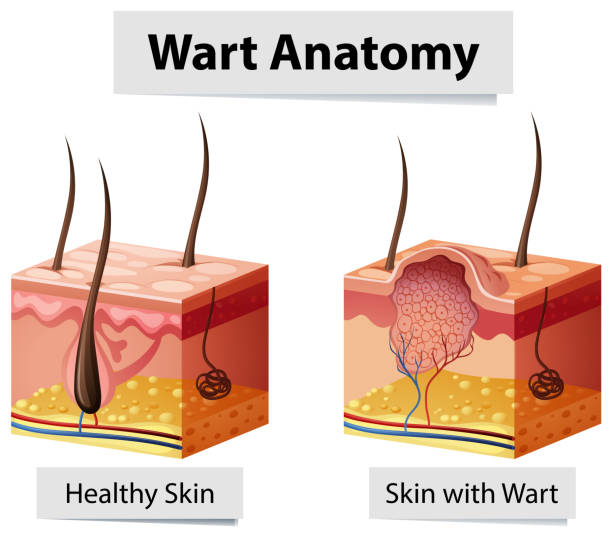
    Verruca vulgaris, commonly known as a common wart, is a benign skin growth caused by the human papillomavirus (HPV), primarily types 2 and 4 (though other types can also be involved). It often appears on the hands, fingers, elbows, and knees as a rough, raised, and sometimes cauliflower-like lesion.

    Causes & Transmission

    • Direct skin contact with HPV (e.g., from infected surfaces or another person).
    • Small cuts or abrasions increase susceptibility.
    • Common in children, immunocompromised individuals, and those frequently handling wet surfaces (e.g., swimmers).

    Symptoms

    • Firm, rough, raised lesion with a rough surface.
    • May have black dots (thrombosed capillaries).
    • Usually painless but can be tender if on pressure areas.

    Clinical Examination

    Appearance:

    • Small, rough, firm papule with an irregular surface.
    • May have a cauliflower-like or hyperkeratotic texture.
    • Can be single or multiple.
    • Possible black dots (thrombosed capillaries) on the surface.

    Location & Distribution:

    • Often found on the eyelids, lips, forehead, cheeks or around finger nails.
    • Can be isolated or appear in clusters.

    Palpation:

    • Surface feels rough, unlike smooth skin lesions (e.g., molluscum contagiosum).
    • Non-tender in most cases, unless irritated.

    Diagnostic Confirmation (if needed)

    Dermatoscopy: Shows a papillomatous surface with red or black dots (capillary loops).

    Scraping Test: Gently scraping reveals pinpoint bleeding (confirming capillary involvement).

    Biopsy: Histopathology shows hyperkeratosis, papillomatosis, and koilocytes (HPV-infected keratinocytes).


    Differential Diagnosis

    • Seborrheic keratosis – More waxy and stuck-on appearance.
    • Molluscum contagiosum – Dome-shaped with central umbilication.
    • Actinic keratosis – More scaly and linked to sun exposure.
    • Basal cell carcinoma (rare in young patients) – Pearly edges, slow-growing.

    Conventional Treatment:

    • Cryotherapy (freezing)
    • Curettage (scraping)
    • Electrosurgery
    • Laser ablation
    • Often done for cosmetic reasons or irritation

    Homeopathic Perspective:

    Individualized treatment based on totality of symptoms.

    Focus on constitutional remedy to prevent recurrence.


    Schedule an appointment with us?


    Interested in reading more about other cases cured at RG’s Homoeopathy?